Former California Republican Party Chairman and Republican strategist Ron Nehring appeared on BBC News following the passage of the "Big Beautiful Bill" to discuss how it will impact taxpayers, the economy and the 2026 campaign.
|
In East County San Diego, wildfire isn’t a remote threat—it’s a recurring reality. Our subregion, which includes Crest, Harbison Canyon, Dehesa, and Granite Hills, ranks among the top 1% of wildfire-prone areas in the entire United States. That’s not an abstract statistic—it’s a daily concern for everyone who lives here.
That’s why our Planning Group took action. On September 9, 2024, we unanimously adopted a comprehensive package of seven wildfire-focused resolutions -- each designed to integrate wildfire resilience into the fabric of land use planning, evacuation policy, and community preparedness. We’re no longer treating fire safety as a side issue. From now on, wildfire risk reduction is our top planning priority. Using Land Use Planning to Drive Wildfire Resilience At the heart of our action plan is a clear principle: land use planning must reduce—not compound—wildfire risk. Our resolutions advise the County of San Diego to revise our Community Plan accordingly, making wildfire risk reduction central to zoning, development standards, transportation capacity, and open space management. Key elements include: Mandatory defensible space and vegetation clearance requirements for new developments. Use of Class A fire-rated roofs, ember-resistant vents, tempered glass windows, and fire-resistant materials. Landscaping rules** that limit flammable vegetation and encourage erosion-safe defensible space. Integration of wildfire risk into all land use decisions, including the siting of new development in relation to fuel loads, slope, and evacuation access. Fixing Evacuation Routes Before the Next Fire Hits Our resolutions also make it clear that evacuation planning must match the threat we face. Crest, for example, has long been served by only one primary evacuation route—La Cresta Road—while the most dangerous fires often approach from the east. We called on the County to take urgent action to: Upgrade Suncrest Truck Trail to serve as a reliable, 24/7, all-weather evacuation route. Secure the remaining easements needed to complete this vital corridor. Establish fuel breaks and maintain vegetation clearance along major roads including La Cresta, Harbison Canyon Road, Dehesa Road, Mountain View Road, and Willow Glen Drive. In short: we must be able to get people out and firefighters in. That requires better roads, better signage, and clear evacuation plans for every community. Community Engagement and Firewise Preparedness Planning and infrastructure are critical—but community involvement is just as essential. Our resolutions advise: Holding at least one annual public event on wildfire preparedness and evacuation. Encouraging every neighborhood in our region to become a recognized Firewise USA community, tapping into the national program that fosters local risk assessment, fuel management, and public education. We also formally recognized the extraordinary work of the Crest Fire Safe Council, whose leadership on public education and the Community Wildfire Protection Plan continues to make our area safer. Next Steps: Updating the Community Plan The County’s current Community Plan for our area is outdated—it doesn’t reflect the fire science, land use realities, or infrastructure challenges of today. That’s why our Planning Group has formally requested the Board of Supervisors to: Initiate a major update of the Community Plan, incorporating all wildfire-related revisions we submitted. If resources aren’t yet allocated, adopt our wildfire-related revisions immediately as amendments to the current plan. We also called for a complete update of the Stoneridge County Preserve Resource Management Plan, after a site visit confirmed that required fuel reduction and trail maintenance had not been implemented—posing an unnecessary hazard to surrounding neighborhoods. This package of resolutions reflects a comprehensive, proactive, and locally driven approach to wildfire risk. It brings together policy, infrastructure, education, and interagency coordination. The message from our Planning Group is simple: We will not wait for the next catastrophe. We are planning for fire—intelligently, urgently, and together. If you live in our community and want to get involved, now is the time. Wildfire resilience starts with good planning—and planning starts with us. Contra Costa Republican Chairman Matt Shupe and I have introduced a bylaw amendment to close an insane loophole in the California Republican Party bylaws. Giving the CRP endorsement to a candidate who has never before been elected as a Republican should require a vote of the party -- and not be given on auto-pilot.
Here is the text of our amendment to be considered at this weekend's CRP convention: PROPOSED AMENDMENT CONCERNING “DEEMED ENDORSED" CANDIDATES Submitted by former CRP Chairman Ron Nehring and Contra Costa Republican Chairman Matt Shupe Section 3.02.02 Deemed Endorsements for Partisan Elective Office in a Top Two, Special, or Recall Election CURRENT LANGUAGE After the Secretary of State’s certification of the primary election results, all Republican Nominees as defined in Section 1.04 (B) shall be deemed to be endorsed by the Committee, absent a Committee decision not to endorse in accordance with Section 3.02.03(A)(3)-(5), and any endorsement for any other candidate for the same office shall be void. PROPOSED LANGUAGE Strike existing 3.02.02 and replace with: A. All Republican Nominees as defined in Section 1.04 (B) who are currently incumbents seeking re-election to the same office shall be deemed to be endorsed by the Committee, absent a Committee decision to unendorse in accordance with Section 3.02(C), and any endorsement for any other candidate for the same office shall be void. In the event of two incumbents seeking re-election to the same office in the same district as a result of redistricting, this subsection shall not apply, and no endorsement shall be granted unless as prescribed in Section 3.02(B). B. Nominees as defined in section 1.04(B) not currently holding the office sought may be endorsed by the committee upon a majority vote of the board of directors, the executive committee, or the committee. C. The board of directors, executive committee, or full committee may by 2/3rds vote of those present and voting following a hearing revoke the nominee status of any candidate who brings discredit to the Republican Party. SUMMARY The California Republican Party bylaws currently confer the committee’s endorsement automatically any time only one Republican candidate for state office, U.S. House of Representatives or U.S. Senate moves on to the second round from the top-two primary. This “deemed endorsed” rule is flawed in that it allows any individual, no matter their views or how they reflect on the Republican Party, to claim to have the endorsement of the California Republican Party. The rule currently constructed has resulted in significant reputational damage to the California Republican Party multiple times. In 2018, a three-time Democratic candidate, Holocaust denier and blatant anti-Semite running in a heavily Democratic Congressional district, switched to the Republican Party, was the only “Republican” filing for the office, moved on to the second round, and thus earned the party’s “automatic” endorsement. In effect, by virtue of being the only “Republican” candidate to file in a lopsided Democratic district, this three-time Democrat, anti-Semitic fringe candidate had been endorsed by the California Republican Party. See Holocaust Denier in California Congressional Race Leaves State G.O.P. Scrambling - The New York Times (nytimes.com) To prevent a repeat of this and similar damaging incidents, the proposed change would limit “deemed endorsements” to incumbents seeking re-election to the same office. Presumably Republican incumbents who have previously been elected to state or federal office will have met a higher standard of scrutiny and conduct, and can still have the endorsement revoked per the current language. Candidates seeking open seats, or challengers, would be deemed endorsed only following an affirmative vote by either the Board of Directors, the Executive Committee, or the full committee. This requirement of a vote to receive the party’s official endorsement is critically needed to protect the future reputation of the California Republican Party, and to protect Republican candidates from being unwittingly affiliated with endorsed candidates who do not reflect the values and ethics of the Republican Party. The proposed language also empowers the full Committee, the Board of Directors, or the Executive Committee to revoke a candidate’s nominee status if they bring discredit to the Republican Party. Rather than defining strictly the term “discredit,” the proposed language requires a hearing and has a high threshold (2/3rds vote) to take effect. Respectfully submitted by former CRP Chairman Ron Nehring and Contra Costa County Republican Chairman Matt Shupe. I recently had the opportunity to be the featured guest on an episode of Name Drop San Diego, a podcast of the San Diego Union-Tribune, my adopted home town newspaper.
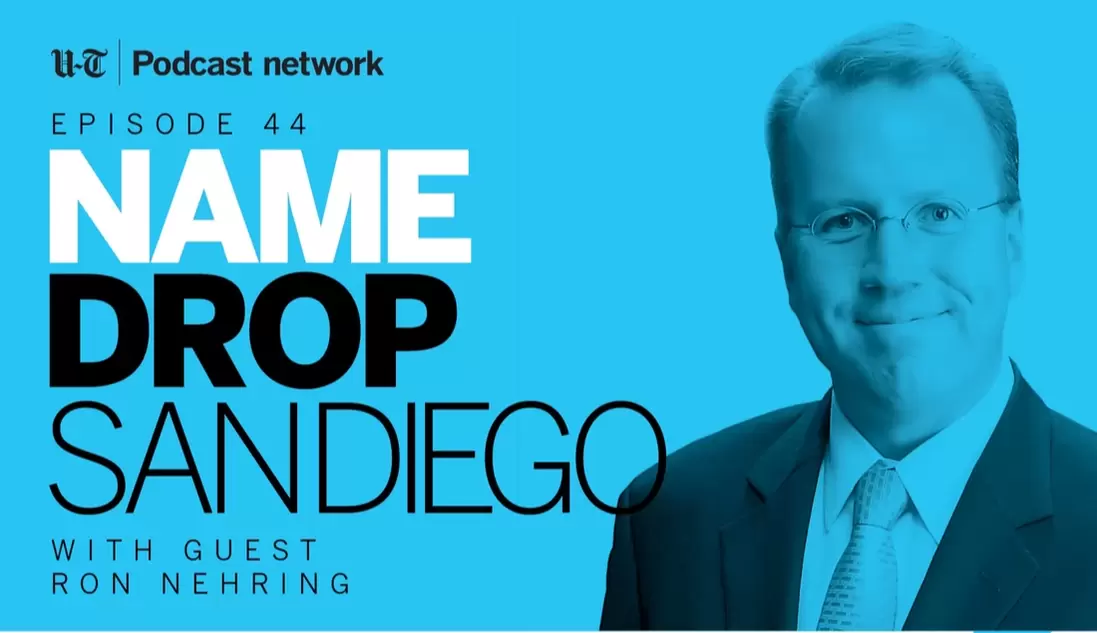
Here's what interviewers Abby Hamblin and Kristy Totten had to say: Californian Ron Nehring has a uniquely comprehensive view of the Republican Party over the last 20 years. He’s worked in the GOP at every level, chairing the San Diego County Republican Party from 2001 to 2007, chairing the California Republican Party and serving on the Republican National Committee from 2007 to 2011, running for lieutenant governor of California against Gavin Newsom in 2014 and being the national 2016 presidential campaign spokesman for Sen. Ted Cruz, R-Texas. Currently, his focus and interest is both global and local. He champions the party on a global level, directing international programs for The Leadership Institute, which teaches conservatives how to succeed in politics, government and media. And last year, the Crest resident was also elected to the Crest, Dehesa, Harbison Canyon and Granite Hills planning group. You can listen to the full podcast episode here. California town burns because state regulators sat on a request to thin surrounding forest9/18/2020
The Wall Street Journal is reporting on yet another avoidable California wildfire tragedy.
While politicians in Sacramento are quick to invoke "climate change" as the sole cause of the state's wildfires, the reality is wildfires can be more directly traced to failed state policies in the areas of forest management and defensible space. Case in point: the town of Berry Creek sought permission to thin surrounding forests to stem the risk of wildfire. The state bureaucracy sat on the request for two years. Just as one of the contracts to thin the forest was finally about to go out for bid, the town was burned to the ground. For those of us living in fire prone areas, bureaucracy and inter-governmental infighting can be as threatening as wildfire itself. For the bureaucracy, wildfire has become institutionalized -- it's about permits and paperwork. For some of the politicians, it has become about adherence to an ideology that does not permit sound forest management. Read about what happened to Berry Creek here: WSJ: A California Town's Fire-Protection Plans Hit Red Tape, Then the Flames Came If you want to move the mouse, move the cheese.
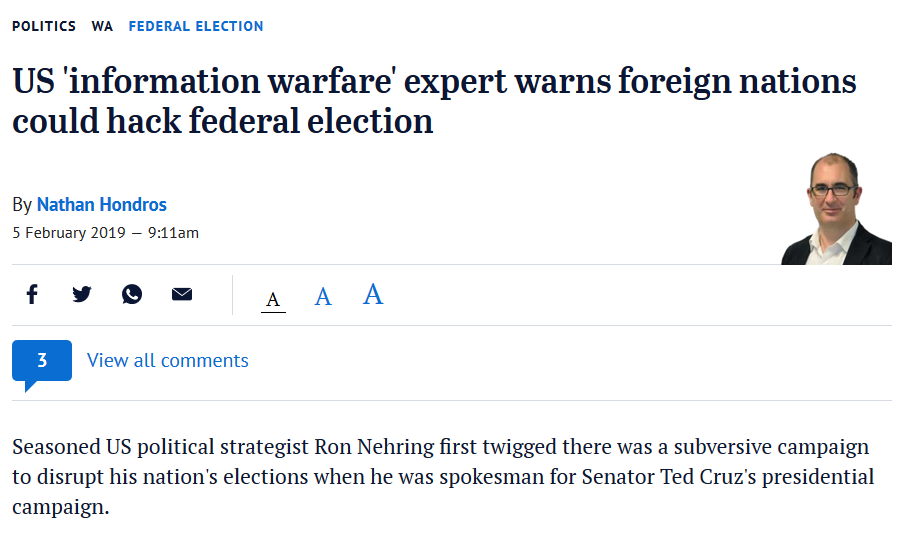
The crowded Democratic field combined with offers from news networks to host early presidential debates has created an incentive structure that rewards candidates taking early shots at each other while taking increasingly problematic positions on hot button issues that will pose challenges in a general election campaign. That's the thrust of my story in The Hill this week. To understand why Democratic candidates are taking positions so at odd with voters -- like abolishing private health insurance and having taxpayers foot the bill for every person's healthcare in the United States whether they are here legally or not -- we need to understand the incentives pulling them there. Even worse, the drive to maximize national poll numbers creates another conflict. To win back the White House, Democrats must take back midwestern states like Wisconsin, Michigan, Ohio and Missouri. Yet, with their national membership weighted heavily toward coastal urban centers, Democratic candidates are incentivized to cozy up to those Democrats, who are on a different page than Midwestern general election voters. To explore this further, take a look at my piece in The Hill. At the invitation of the Liberal Party of Western Australia I had the opportunity to discuss the issues surrounding information warfare with Australian leaders and activists. The Liberal Party is the country's governing-center right party.
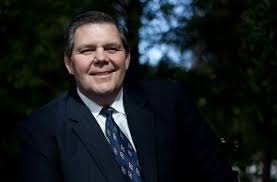
I sat down with journalist Nathan Hondros to discuss a bit of what we saw in the U.S. presidential election in 2016, and the possibility of hostile foreign powers using similar techniques to impact Australia's upcoming federal election. While I have not seen direct evidence of such interference in Australia, we need to be aware of information warfare as a tool available to governments to sway public opinion in target countries. Click on the link below to read the full story in the Sydney Morning Herald. The ongoing efforts of the Russian government to undermine America's democracy and society are complex and at times controversial. The stakes are high -- a foreign government and its proxies are investing substantial resources to undermine both our system of government, and the fabric of our society. While the net impact of these efforts on election outcomes is subject to debate, many facts are well established and beyond reasonable questioning.
In my latest piece for Medium, I provide a quick read on the fundamental objectives and methods to Russian information warfare. (I never use the common term "meddling" to describe the Russian actions -- meddling is when I wander into the kitchen and start messing around with what's on the stove. This is far more serious). The actions of Russia's intelligence services and troll farms aligned with Russian government objectives did not stop on Election Day 2016 in America -- they are ongoing, both in the United States and also against targets in Europe and elsewhere. For this reason, it is important for every American to have an understanding of what is going on. I hope you enjoy the piece. Hack. Leak. Amplify -- A fast primer on Russia's information warfare campaign in the United States (Medium) I'm across the Atlantic several times a year, so I decided to help fellow business travelers by sharing my technique for beating jetlag even while traveling in economy. It's the topic for my first contribution on Medium. Take a look:
How I defeat jetlag on transatlantic trips -- in economy. Ron Nehring on Medium This article first appeared on the Flashreport on June 23, 2017.
Republicans in Congress are moving forward to fulfilling the promise of repealing and replacing Obamacare. The work performed by Senate Republicans revealed this week represents another step in the right direction. Repeal and replacement of Obamacare cannot come too soon. Millions of Americans have had their health insurance policies cancelled, choices reduced, and taxes raised by the law. In campaigning for its passage, President Barack Obama promised Americans that if they like their plan, or their doctor, they can keep both. This was flatly untrue. I know, because I’m one of the more than 1 million Californians whose health insurance was made illegal under the law. Also like many Californians, the options I had for a new plan were all dramatically more expensive than my old plan. This is not what we were promised. Obamacare was supposed to provide more options for people to buy insurance, but for millions of Americans the opposite has proven true. In Arizona, for example, state residents are down to just one choice on the Obamacare exchange. One choice is no choice. Legislating has been likened to sausage making for a good reason – it’s not a pretty process, and it’s easy to lose focus. Republicans can and must concentrate not just on repealing Obamacare, but replacing it with a law that works better. The Senate Republican discussion draft represents tremendous progress. Collapsing insurance markets would receive a boost with a $15 billion short term stabilization fund. Obamacare’s individual and employer mandates would go, along with the law’s taxes. In fact, repealing Obamacare is a giant tax cut for the American people, doing away with all kinds of taxes that drive up the cost of everything from medical devices to prescription drugs. The proposal would replace Obamacare’s subsidies with more market oriented tax credits benefitting people whose income falls between the federal poverty level and 350% of that rate. The tax credits are advanceable and refundable. That is, people who currently pay zero federal income taxes would receive the full amount of the credit in the form of a payment that can be used to help pay for health insurance. Several important aspects of the current law are preserved, such as coverage for pre-existing conditions, and allowing children to stay on their parents’ insurance plan to age 26. Several Republican Senators, including Ted Cruz of Texas, stopped short of endorsing the Senate discussion draft, looking to ensure that premiums under the new law come down. This is wise – Republicans will be held fully accountable for how health insurance markets work after Obamacare is relegated to the ash heap of history, so the insistence that rates must come down because of a better performing insurance markets is both smart policy and smart politics. Specifically, among other reforms Cruz wants Health Savings Accounts expanded so Americans can pay for insurance premiums with pre-tax income. This is an important reform that would correct a 70-year-old quirk in the tax code that makes health insurance premiums tax deductible when employers pay for it, but not when purchased by an individual. This fix would provide a big cost savings for many families while leveling the tax treatment of employer and individually purchased insurance plans. Tacking the lawsuits that needlessly drive up health insurance costs, Cruz wants to see incentives for states to adopt laws like California’s that cap punitive damages in malpractice cases. California’s MICRA law limits non-economic damages in malpractice cases to $250,000. Other states have no such cap – a big bonus for trial lawyers. With the GOP in charge at both ends of Pennsylvania Avenue, Republicans must fulfill the promises of repealing Obamacare, fundamentally reforming and lowering federal taxes, and securing our southern border. These big ticket legislative items will have a real positive impact on Americans’ quality of life while proving Republicans can serve as an effective governing party. Great progress has been made, negotiations continue, and there is now great cause for optimism that Obamacare’s days are finally numbered. |
RSS Feed